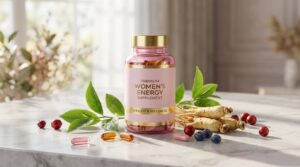
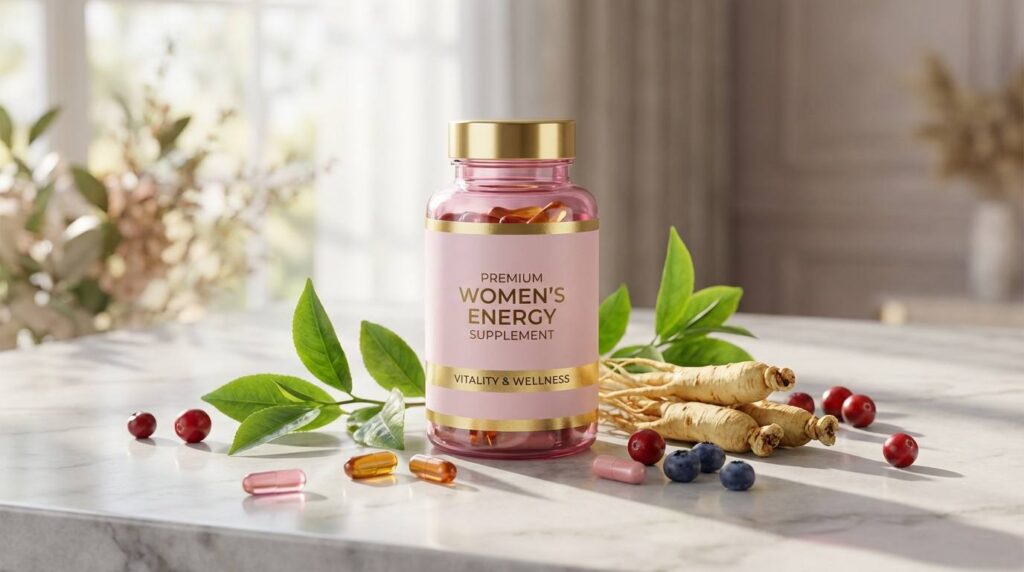
Women’s energy supplements are natural or herbal products designed to help women feel more energetic and fight fatigue. They often combine vitamins (like B‑complex or iron) and gentle plant “adaptogens” (such as ashwagandha, rhodiola, ginseng or maca) that support the body’s stress response and hormone balance. These supplements aim to increase focus and stamina without the crash of sugary energy drinks. In fact, as one expert guide notes, “natural energy supplements are more popular than ever… designed specifically for women”. In practice, a good women’s energy supplement might include B‑vitamins to aid metabolism, iron if you’re low, plus herbal herbs that reduce stress and improve sleep – all of which can translate into higher daily energy.
Most women start by asking: Why am I so tired? Fatigue in women often comes from a mix of factors like nutrient gaps, busy schedules, and hormonal ups-and-downs. For example, heavy menstrual bleeding or perimenopausal changes can cause iron loss, leading to anemia and fatigue. Stressful jobs, lack of sleep, and poor nutrition make it harder, too. Women’s energy supplements tackle these by filling nutrient gaps and calming stress pathways.
One key strategy is adaptogenic herbs. These are plants traditionally used in Ayurveda or Chinese medicine to build stamina. Examples include ashwagandha, rhodiola, and ginseng. Research shows these herbs may help your body adapt to stress and fight tiredness. For instance, ashwagandha has been used for thousands of years and may boost energy by reducing anxiety and improving sleep. Rhodiola (golden root) is another adaptogen often taken to increase endurance; one study found it reduced fatigue in people with long-term tiredness. Similarly, ginseng contains compounds called ginsenosides with antioxidant effects, and some trials suggest it can improve fatigue symptoms and general well-being. In short, these herbs support healthy stress hormones and can make you feel less “burnt out” during the day.
Alongside herbs, vitamins and minerals play a crucial role. Your body needs certain nutrients to make cellular energy (ATP) and keep your blood and nerves healthy. A top pick is the B‑vitamin complex: eight B‑vitamins work together to turn food into fuel. If any are low (especially B6 or B12), you can feel weak or tired. Taking a B-complex or a B12 supplement can help if tests show you’re deficient. Likewise, iron is key: women often have higher iron needs (especially during heavy periods), and low iron causes anemia – a common cause of fatigue. If a doctor finds iron-deficiency, an iron supplement can restore red blood cells and energy levels. Other important nutrients include magnesium (needed for energy production in hundreds of enzyme reactions) and vitamin D (low vitamin D is linked to fatigue and low mood). Some women’s formulas also include vitamin C or E because they help absorb iron and protect cells from stress.
In practice, a balanced women’s energy supplement might combine these ingredients. For example, many contain B-complex plus vitamin D for metabolism and mood, iron if needed, and herbal adaptogens. One table of top ingredients even lists natural caffeine (from green tea), L-theanine (to smooth caffeine), rhodiola, B-vitamins, ginseng and CoQ10. These are gentle alternatives to coffee or energy drinks. (Always check labels and choose stimulant-free blends if you want to avoid jitters.)
One herb often highlighted is ginseng (panax ginseng). Ginseng roots are classic energy tonics – they improve circulation and vitality. Some studies find ginseng can reduce fatigue and boost endurance. As a picture of ginseng root shows, supplements may use its dried roots or extracts. Ginseng is generally safe, though it can affect blood pressure or interact with medications, so it’s wise to discuss it with a doctor.
Another popular herbal “spice” is maca root. Maca (a Peruvian plant) is used to boost strength and relieve menopause symptoms, and some people take it for more energy. While high-quality research is still developing, maca is known for its nutrient profile and has been traditionally used to support stamina. Similarly, herbs like licorice or holy basil (not shown in our images) may help hormonal balance and stress in subtle ways.
For best results, experts suggest taking supplements one at a time and starting with low doses to gauge your response. Pair them with healthy habits: good sleep, exercise, and a nutrient-rich diet all multiply the effect. Remember: supplements work best if there’s a true deficiency or imbalance. If your fatigue is severe or unusual, check with a healthcare provider before supplementing.
In summary, women’s energy supplements focus on natural, gentle boosts: vitamins (especially B-vitamins, vitamin D, iron if needed) plus herbal adaptogens and nutrients that support hormones and stress resilience. They can be a helpful part of your routine if lifestyle factors or hormones are dragging you down. By choosing high-quality, science-backed formulas and talking to your doctor, you can find a supplement plan that really helps you feel more vibrant each day.
Key Takeaways:
-
Women often feel tired from hormone shifts (PMS, menopause) and nutrient gaps. Natural supplements can target these issues.
-
Adaptogenic herbs like ashwagandha, rhodiola, and ginseng help the body cope with stress and have been shown to reduce fatigue.
-
Essential vitamins/minerals include B‑complex (energy metabolism) and iron (especially if heavy periods cause anemia).
-
Talk to your healthcare provider before starting supplements, especially if you’re pregnant or on medication. Start low, combine with good sleep and diet, and choose trusted brands for the best energy boost.